
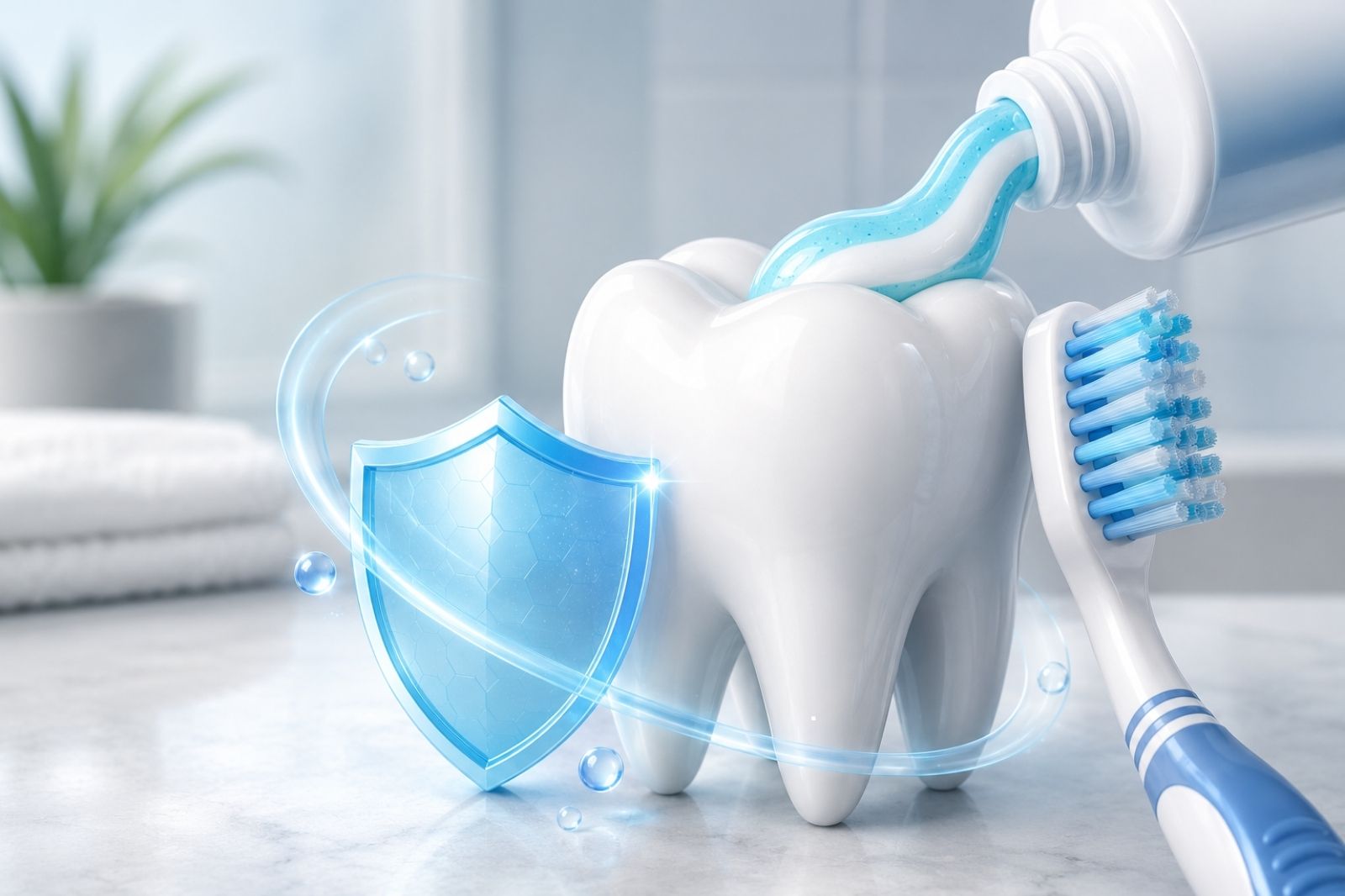
By rebuilding enamel, creating a protective layer called fluorapatite, and slowing the growth of harmful bacteria, fluoride is far more than a label.
At our Bexley dental clinic, we often encourage fluoride toothpaste as a basic part of preventive dentistry strategy.
Let’s learn more about it and understand how a simple choice can help you avoid an emergency dentist Bexley visit.
-
Fluoride Reverses Early Decay
Regularly brushing with fluoride toothpaste accelerates remineralisation.
When you consume meals, oral bacteria feast on dietary carbohydrates and produce acidic waste products. This acid strips away vital calcium and phosphate ions from the outer layer of your tooth.
So, why dentists recommend fluoride toothpaste? It is because the fluoride ions act as a powerful catalyst to repair the damage before it becomes permanent.
-
Fluoride Strengthens Your Teeth By Creating Fluorapatite
The fluoride ions actively displace the weaker hydroxyl groups to synthesise Fluorapatite.
Patients often ask at our Bexley dental clinic the role of fluoride’s presence here.
We find that fluorapatite binds more tightly together than the original mineral, allowing your teeth to resist mechanical wear and tear much more effectively.
-
Fluoride Raises the Critical pH Threshold
The National Health and Medical Research Council supports the use of fluoride to establish protective thresholds from the critical pH level of 5.5 to a highly acidic pH level of 4.5.
By lowering this breakdown threshold, fluoride provides a promising safety buffer.
Ultimately, your teeth can withstand significantly higher concentrations of dietary and bacterial acids without losing their structural density.
-
Fluoride Inhibits Cariogenic Bacteria
Fluoride inhibits cariogenic bacteria like Streptococcus mutans, the specific decay-causing microorganisms, residing within dental plaque.
It passes directly through their cell walls and disrupts their metabolic activity.
Because these microorganisms can no longer process dietary sugars efficiently, their ability to produce acidic waste drops dramatically.
-
Fluoride Helps in Healing Lesions
Carious lesions indicate that the underlying mineral structure has collapsed, while the outer enamel shell remains intact.
Fluoride introduces these subsurface weak zones with mineral blocks, halting the progression of the decay and eliminating the need for mechanical drilling and dental fillings.
Preventive dentistry at our Bexley dental clinic focuses heavily on intercepting these lesions early. If caught early, these lesions might not require invasive treatment.
-
Safeguarding Exposed Root Surfaces
As we age, our gums can recede and expose the root surfaces of the teeth. These roots are covered by a soft, highly porous tissue called dentine.
Fluoride binds exceptionally well to dentine, hardening the porous root surfaces and creating an essential barrier.
It is important in cavity prevention because dentine is vulnerable to root caries, which are fast-moving cavities that target the tooth’s root.
-
Creating a Beneficial Salivary Reservoir
After brushing, small amounts of fluoride adhere to the soft tissues of your mouth and gums, then blend into your saliva.
Throughout the day, minor acid spikes from food consumption causes this reservoir to release active fluoride ions to neutralise it actively.
Interestingly, ADA also highlights how fluoride-infused saliva also aids in caries prevention.
Fluoride and Healthy Teeth
It is evident that fluoride does much more than being a label on your toothpaste, it is a therapeutic mineral.
Our dentist Bexley residents trust, have discussed how its absence might increase the possibility of infections, nerve pain, and fractures.
If you want to avoid concerns from escalating and save yourself a search for an emergency dentist near me, call (02) 9567 1618 to get your fluoride treatment done at Aelite Dental Bexley.
FAQs
1. Should you rinse your mouth with water after brushing with fluoride toothpaste?
No. Spitting out the excess foam without rinsing with water is highly recommended. Rinsing immediately washes away the active fluoride ions, reducing the timeframe that the mineral can spend interacting with the enamel matrix. Leaving a thin layer of residual paste allows the salivary reservoir to work for a longer therapeutic duration.
2. What happens if a toddler accidentally swallows a small amount of fluoride toothpaste?
Ingesting a single smear or a pea-sized amount of standard toothpaste will not cause acute toxicity or harm. The human body can safely process minor amounts. Parents should encourage children to spit out the foam to prevent a regular habit of ingestion.
3. Is it safe to use fluoride toothpaste during pregnancy?
Yes. Maintaining excellent oral health is critical during pregnancy, as hormonal fluctuations can exacerbate gum irritation. Using standard quantities of the mineral is entirely safe for both the mother and the developing baby.
4. Does tap water fluoridation remove the need for using fluoride toothpaste?
No. Public water supplies provide a systemic and low-level continuous exposure through saliva, whereas toothpaste delivers a highly concentrated topical application directly to the tooth faces. Both mechanisms work together to maximise overall defence.
5. Does swallowing tiny amounts of toothpaste over many years cause skeletal health complications?
Systemic bone complications, known as skeletal fluorosis, require the prolonged ingestion of massive industrial quantities of the mineral. The microscopic amounts swallowed accidentally during proper brushing are far too low to trigger systemic changes.